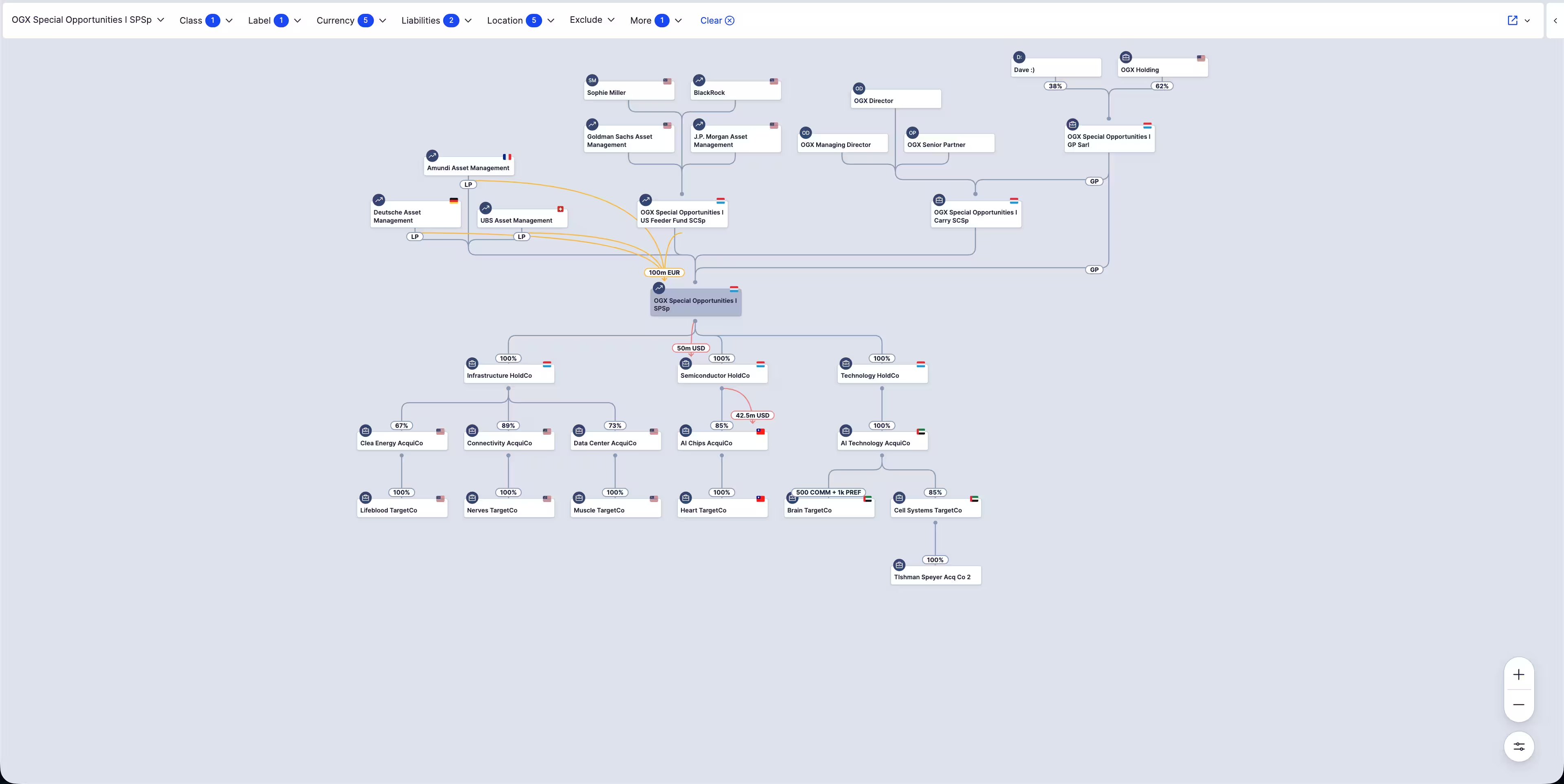
The structure above the fund changes faster than anyone can redraw it
The GP, the management company, holdcos, co-investment and carry vehicles, and a constantly shifting set of SPVs. ORCA keeps that structure current automatically, holds every governing document attached and traceable to source, and lets you see who holds which mandate across the whole group.
Sound familiar?
New SPVs and acquisition vehicles appear constantly; keeping a hand-drawn chart current is a weekly job nobody has time for.
Finding every mandate to withdraw means checking entity by entity.
Reconstructing a historical group chart from old filings is hours of work.
Errors with regulators or LPs put re-ups — and the firm's reputation — at risk.
Exit windows are narrow, and juniors spend weeks pulling documents together.
The structural and governing-document layer for the firm itself
A group chart that keeps itself current
ORCA generates the structure chart automatically from your entity data — GP, management company, holdcos, co-investment and carry vehicles, every SPV — so it reflects today's structure instead of last month's redraw.
Carry and fund roles, shown structurally
General Partner, Limited Partner and Special Limited Partner (the carry vehicle) appear as roles on the chart, with commitments recorded against them. ORCA represents those vehicles and roles structurally — it does not run waterfall or carry calculations.
Voting vs. economic rights, and multiple share classes
Hold several share classes per entity with their own voting weights, and distinguish legal from economic ownership.
Every mandate, visible in seconds
See which roles a person holds across the whole group. When someone leaves, find every directorship to withdraw at once.
Time-travel for audits
Asked for the group as it stood on 31 December three years ago? Click back to that date instead of reconstructing it from old filings.
One traceable home for governing documents
Shareholder resolutions, partnership and contribution agreements, side letters and subscription documents — attached to the entities they govern, with completeness checks that flag what's missing.
Stay exit-ready
Keep the structure and its documents in order continuously, so when a window opens the data is already there to feed a diligence process — rather than juniors spending weeks assembling it.
Audit the entire ownership chain in moments
Jones Capital selected ORCA across its PE portfolio for audit-ready visibility — visualising ownership across entities, handling multiple share classes, and centralising entity data so investment, legal and finance teams share one real-time view.
What ORCA does — and doesn't — for PE
Keeps the group structure current and filterable; shows GP/LP/SLP roles and commitments; supports share classes, voting weights and the legal-vs-economic distinction.
Tracks mandates; time-travels for audits; holds governing documents with completeness checks.
It isn't fund administration. The granular LP work — capital calls, drawdowns, distributions, LP reporting — typically stays in your fund-admin tool.
ORCA is the structural and governing-document layer for the firm itself, working alongside fund admin rather than replacing it.
Questions investment firms ask
Is this a fund-admin tool?
No. Fund admins handle LP accounting, capital calls and LP reporting; ORCA gives the firm the structural truth above and around the fund.
How do you handle carry?
Structurally. The carry vehicle appears as a Special Limited Partner on the chart, alongside the GP and LPs. ORCA represents the structure; it doesn't run the waterfall calculation.
Can it show voting power, not just ownership?
Yes. Hold multiple share classes with their own voting weights and switch the chart between ownership percentage and voting power.
We built our own thing in spreadsheets. Why switch?
So did Fifth Partners — their custom tooling couldn't keep up with the auditability they needed.
See ORCA on a live PE structure
40 minutes, with a human. From GP down to the latest SPV.